

Buy car insurance online and save up to 91%*
15 Years Vehicle Scrappage Policy Explained: Rules, Fines & What Owners Must Do
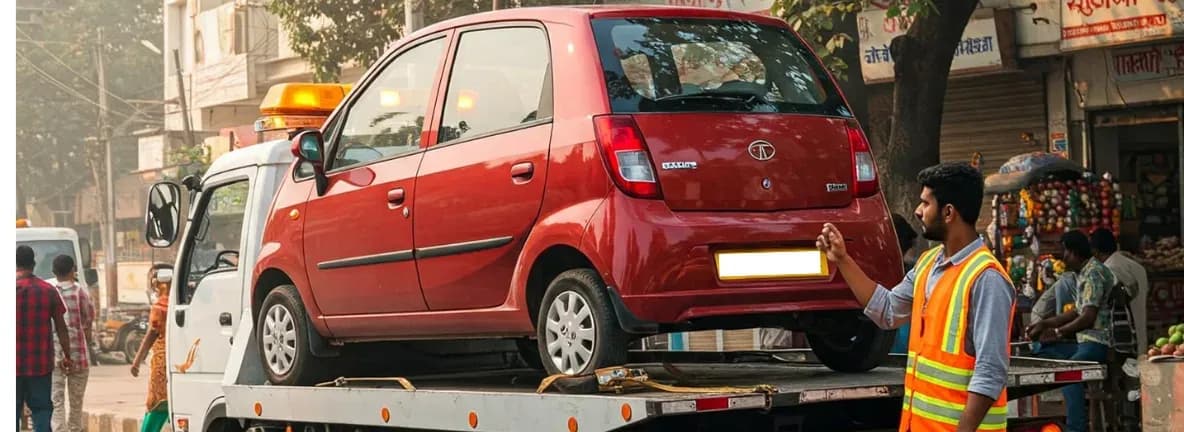
Intending to remove unfit vehicles from the road and keep road safety and air pollution in check, the authorities in India have introduced the vehicle scrappage policy. It aims to deregister older vehicles, specifically 15 and 20-year-old ones that have failed the fitness testing, and have them scrapped at registered scrapping facilities. As a car owner, it is your job to understand this policy and ensure your vehicle undergoes the necessary testing and processes. On this page, we discuss everything there is to know about the car scrap policy, including rules, benefits, and charges.
What is the Car Scrap Policy in India?
The policy of vehicle scrappage aims to scrap older vehicles that are not fit for the Indian roads and encourage owners to replace them with newer, modern vehicles. It is a policy introduced and backed by the government.
As per the car scrap policy, commercial vehicles older than 15 years and private vehicles older than 20 years will be scrapped if they fail the mandatory vehicle fitness testing. A car that fails the fitness testing shall be designated as an End-of-Life Vehicle or ELV.
For Heavy Commercial Vehicles (HCVs), Commercial Vehicles (CVs) and Private Vehicles (PVs), the government is working on enforcing mandatory fitness testing only via Automated Testing Stations (ATS). However, it is heavily dependent on the availability of infrastructure, and in some areas, manual testing is still being done. But the goal is to shift completely towards automated testing from manual testing.
What is the Purpose of the Old Car Scrap Policy?
Here are some of the main reasons why the 15 years car scrap policy has been introduced by the government in India:
1. It aims to develop an automated system where vehicles that are unfit for the road will be scrapped accordingly.
2. Vehicle owners opting for the car scrap policy will benefit from several incentives, helping them replace their older cars with newer, better ones.
3. Replacing older, unfit vehicles with new vehicles with modern features will ensure better road safety.
4. Removal of older, unfit vehicles from the road will help reduce pollution levels.
5. The policy shall pave the way for a better future, with environmentally friendly and technologically advanced vehicles on the road.
What Are the Benefits of Old Vehicle Scrapping?
These are some of the main car scrap policy benefits in India:
1. Environmental perks
The old car scrap policy intends to take unfit vehicles off the road and have them scrapped and replaced with newer vehicles. By doing so, there will be less air pollution and carbon emissions. Additionally, car scrapping at authorised facilities will ensure proper recycling of metal, rubber and plastic.
2. Financial perks
The owner of older cars who opt for this policy will be able to enjoy certain financial benefits. This will help them buy a new vehicle at cheaper, discounted rates and replace older, unfit four-wheelers without any issue.
3. Economic perks
The scrapping of older vehicles will boost the demand for newer vehicles. Additionally, it will increase vehicle manufacturing and create new jobs in the vehicle scrapping, recycling and automobile industries.
4. Safety perks
Once the unfit, older vehicles are replaced with newer ones, road safety will improve. Modern vehicles are equipped with better engineering and safety measures compared to older, poorly maintained cars. It is one of the main scrap policy benefits in India.
While on the topic of safety, make sure to invest in and maintain a proper car insurance policy. At Jio Insurance Broking, compare top-rated plans and unlock exclusive discounts when buying or renewing car insurance online.
Old Car Scrappage Policy: Vehicle Categorisation
Due to the availability of multiple types of vehicles on the road, the old car scrap policy may seem a bit confusing to some. Here is a distinct categorisation to help you understand:
1. Private vehicles
Private vehicles refer to personally owned vehicles, including cars and bikes. They are owned by individuals and used for private transport only. They have an age limit of 15 years, after which they are required to undergo the mandatory fitness test. If it passes, registration is renewed for 5 years. However, if it fails the fitness test at the time of renewal (whether at 15 or 20 years) and cannot be restored to compliance, it must be scrapped.
2. Commercial vehicles
Commercial vehicles are vehicles that are used for commercial purposes, such as passenger-carrying buses, goods-carrying trucks, etc. After 15 years, if commercial vehicles fail the mandatory fitness test, then they shall be scrapped.
3. Government vehicles
These are vehicles registered to the government and used for official purposes by government officials. All these vehicles that are older than 15 years are automatically deregistered and shall be scrapped at authorised vehicle scrapping centres.
4. Vintage vehicles
Vintage vehicles are vehicles that are much older than average bikes or cars on the road, generally 50 years or older. They are owned and kept in good shape mainly for their heritage value and are rarely driven on the road. Hence, they have a separate category, and if they are registered as vintage or classic vehicles, they are exempt from the 15 years car scrap policy.
Vehicle Scrapping Process in India: Explained
These are all the details you need to know related to vehicle scrapping:
- Scrapyard process
1. Visit a Registered Vehicle Scrapping Facility after your vehicle has been deemed an End-Of-Life Vehicle or ELV.
2. Complete the necessary documentation as instructed at the scrapyard.
3. The recycler will then proceed with the car scrappage process.
4. Once your car is fully scrapped, you will obtain a “Certificate of Destruction”. You can use this to deregister your car at the concerned Regional Transport Office (RTO).
- RTO process
1. Write a letter addressed to the concerned RTO regarding the scrapping of the old car.
2. Pictures of vehicle scrapping and confirmation from the scrap dealer with their address should also be submitted alongside this letter.
3. You will have to submit the original RC of the vehicle alongside the cut-out of the VIN as provided by the scrapyard before vehicle scrapping.
4. You also need to submit an affidavit confirming the vehicle doesn’t have any pending taxes, challans, insurance claims or loans, and was not involved in theft cases.
Incentives for Old Vehicle Scrapping
When you scrap your old car, you get the Certificate of Deposit, which helps you to unlock the following incentives:
1. Manufacturer discount of up to 5% on the new vehicle purchases
2. Discount of 4-6% on the ex-showroom price of the new vehicle, following the old car scrapping.
3. 100% waiver of the registration fee for a new vehicle.
4. Road tax rebate of up to 15% for transport vehicles and 25% for non-transport vehicles.
Conclusion
The scrapping of older, unfit vehicles is a great initiative. It helps to replace older cars with newer ones, improve road safety and keep pollution in check. The vehicle fitness checking has been streamlined with automated tests, and the availability of authorised vehicle scrapping facilities makes scrapping older cars an easy process. Car owners can use the incentives from the car scrap policy and replace their older vehicle with a new one.
FAQs
The full form of ELV is End-of-Life Vehicle. A vehicle that fails the fitness test is designated as an ELV.
Yes. The sum assured amount of a term plan directly affects the premium. A higher sum assured means a higher premium and vice versa.The main objective of this policy is to replace old, unfit cars on the road with newer and modern vehicles with improved safety features. It also aims to reduce air and noise pollution levels and keep them in check.
Car owners who opt for the vehicle scrappage policy will get various incentives, such as up to 5% manufacturer discount on new vehicle purchases, full fee waiver on new vehicle registration, 4-6% discount on the new car’s ex-showroom price, and tax rebate of up to 15% (for transport vehicles) and 25% (for non-transport vehicles).
You can easily get your old ELV vehicle scrapped at any registered vehicle scrapping facility in India.
Related topics
Jio Insurance Broking Ltd
Jio Insurance Broking Limited
IRDAI License No: 347,
Direct Broker (Life & General),
Valid upto: 11/03/2028
(Renewable)
Get Insured
Quick Links
Email Id
For customers:
customer.care@jioinsure.inFor partners:
posp.support@jioinsure.inToll-Free Number
18008898730(9.30 AM - 6.30 PM, Monday to Friday)
CIN
U67200MH2006PLC165651
Registered office address
1st Floor, Building - 4NA, Maker Maxity, Bandra Kurla Complex, Bandra East, Mumbai, Maharashtra - 400051


Discount is offered by the insurance company as approved by IRDAI for the product under file & use guidelines.
Insurance is a subject matter of the solicitation. For more details on policy terms, conditions, exclusions, limitations, please refer/read policy brochure carefully before concluding sale.
Disclaimer: *Savings result from comparing the highest and lowest premiums for own damage coverage (excluding add-ons) offered by various insurers for the same vehicle, with identical IDV and NCB.

© 2026 Jio Insurance Broking Ltd. All rights reserved.